A formal project summary of the hybrid network, service platform, security posture, validation results, and operational readiness delivered by Information Techs of the Round Table (Team 2).
The project expanded a classroom network into a production-minded environment that balanced availability, security, operational clarity, and maintainability.
This deck explains why major decisions were made, what proof validated them, and what a future administrator needs to know to maintain the environment confidently.
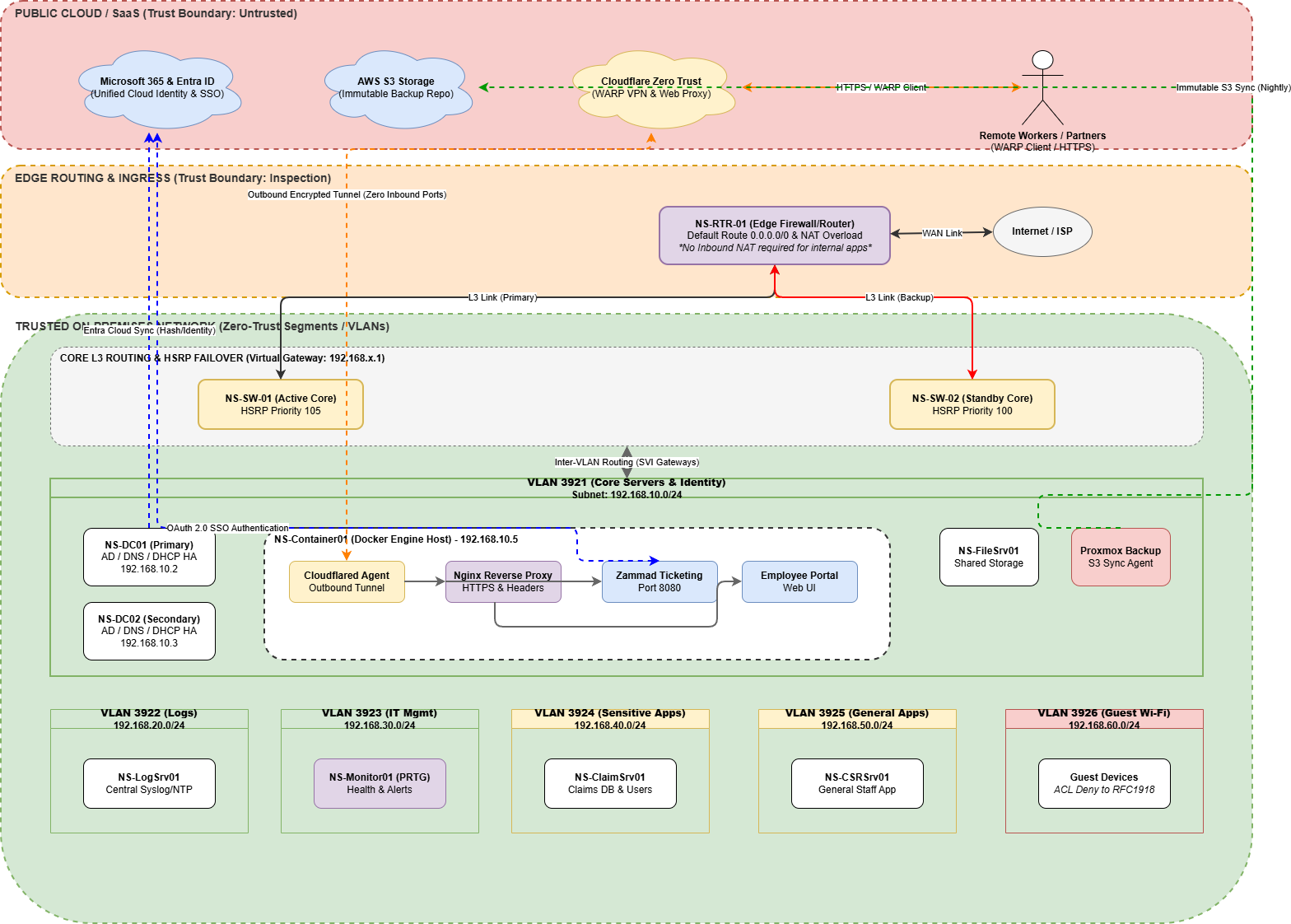
The logical design makes security intent visible: who can talk to what, where identity is enforced, and how resilience is built into the core path instead of being left to endpoints alone.
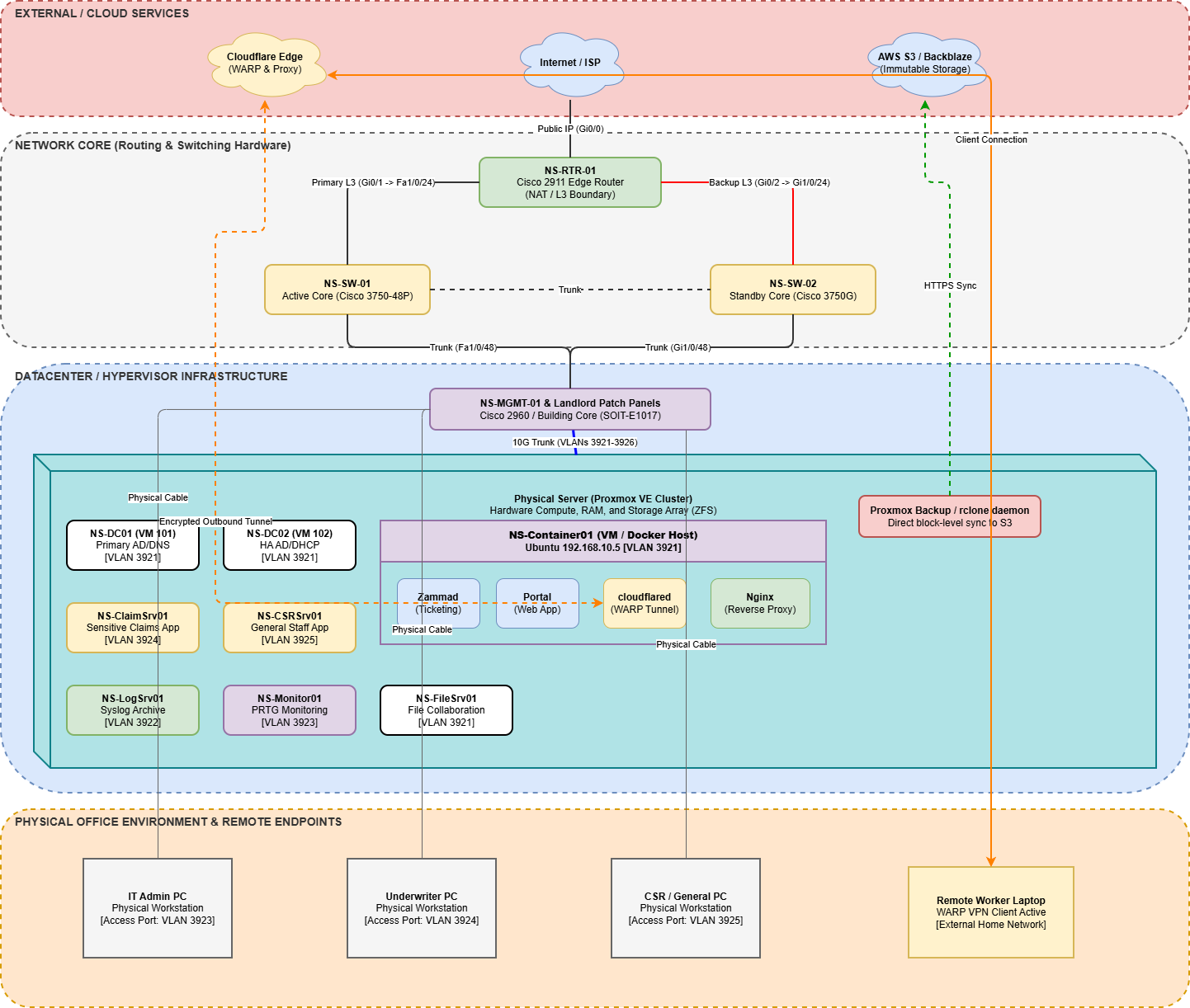
Using both the logical and physical views makes the handoff stronger: one explains architecture intent, the other explains where the moving parts actually live.
Inter-VLAN routing was handled at the switching layer so user and server traffic could move locally instead of hairpinning through the edge. HSRP kept the default gateway stable even when the active core path was interrupted.
Trade-off: more coordination between switch configuration and routing policy, but far better failover behavior.
Routed links between the edge and the core created a cleaner boundary for policy enforcement and reduced ambiguity about where segmentation decisions belong.
Trade-off: slightly more routing complexity, but cleaner troubleshooting and stronger zone-based thinking.
Nginx, Cloudflared, Zammad, and the employee portal were consolidated on a dedicated Linux host to reduce overhead and keep web-service management consistent.
Trade-off: one service host remains a known single point of failure, but the platform is simpler to operate and document.
These choices optimized for resilience, manageable complexity, and defendable security boundaries, which is more valuable in an admin handoff than maximizing novelty.
Linux hosts were hardened around key-based administration, default-deny firewall behavior, service cleanup, and active logging so the attack surface stayed narrow.
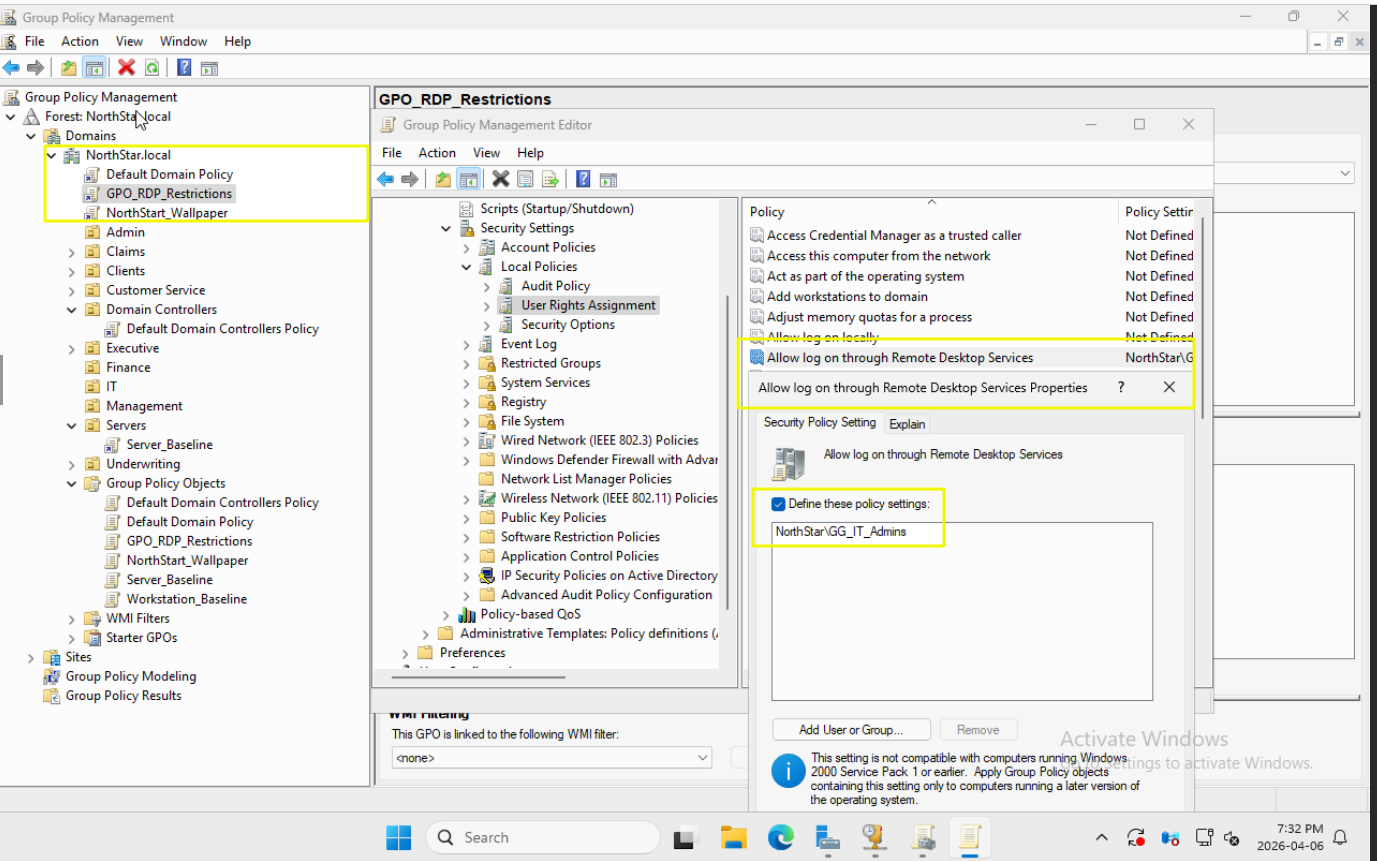
Password rules, account lockout, restricted RDP access, and active Windows Defender Firewall profiles pushed security into baseline policy rather than relying on ad hoc user behavior.
The goal was not only to harden the environment, but to leave behind clear evidence that future admins can verify quickly during audit or troubleshooting.
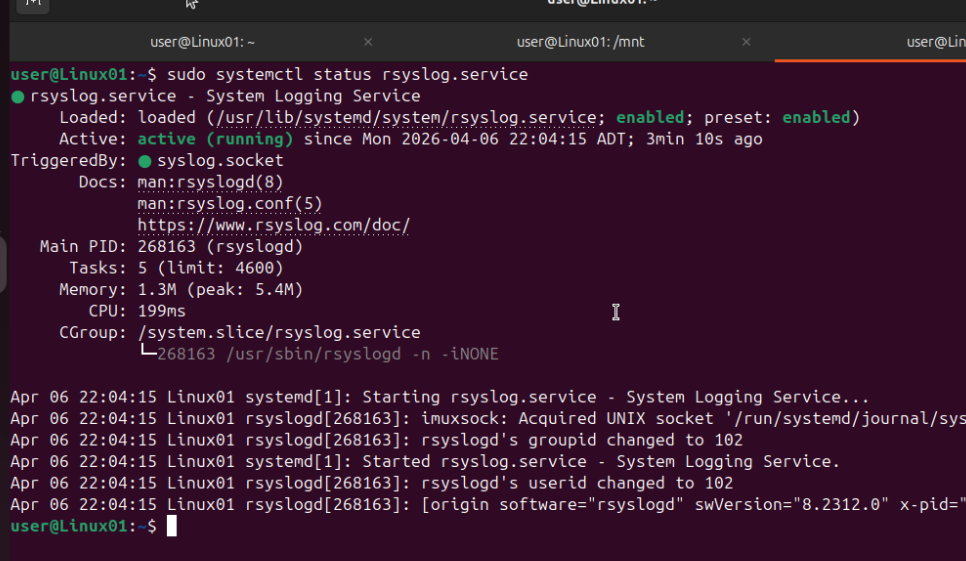
Rsyslog was validated as enabled and running, supporting centralized audit visibility.
Remote desktop rights were scoped to the IT admin group rather than being left broadly open.
Windows Defender Firewall remained active across domain, private, and public profiles.
This approach reflects zero-trust thinking: verify the user, verify the context, and allow only the paths that the architecture explicitly intends.
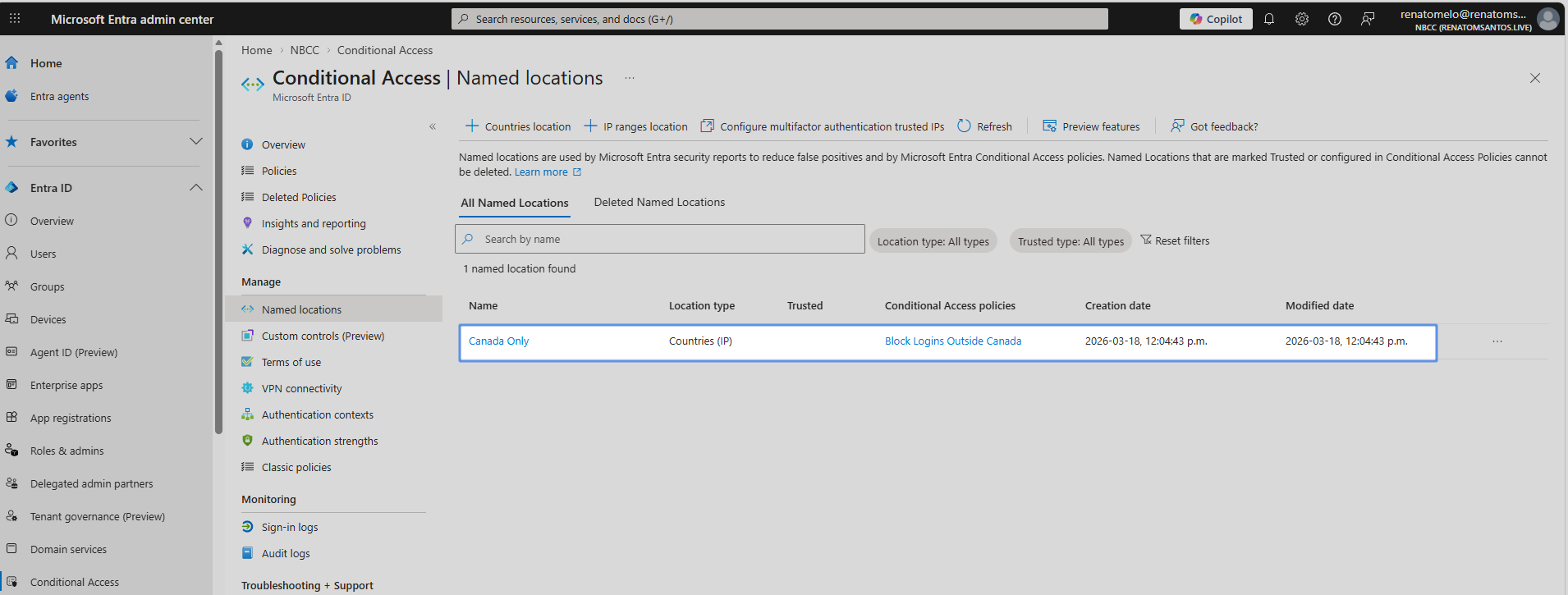
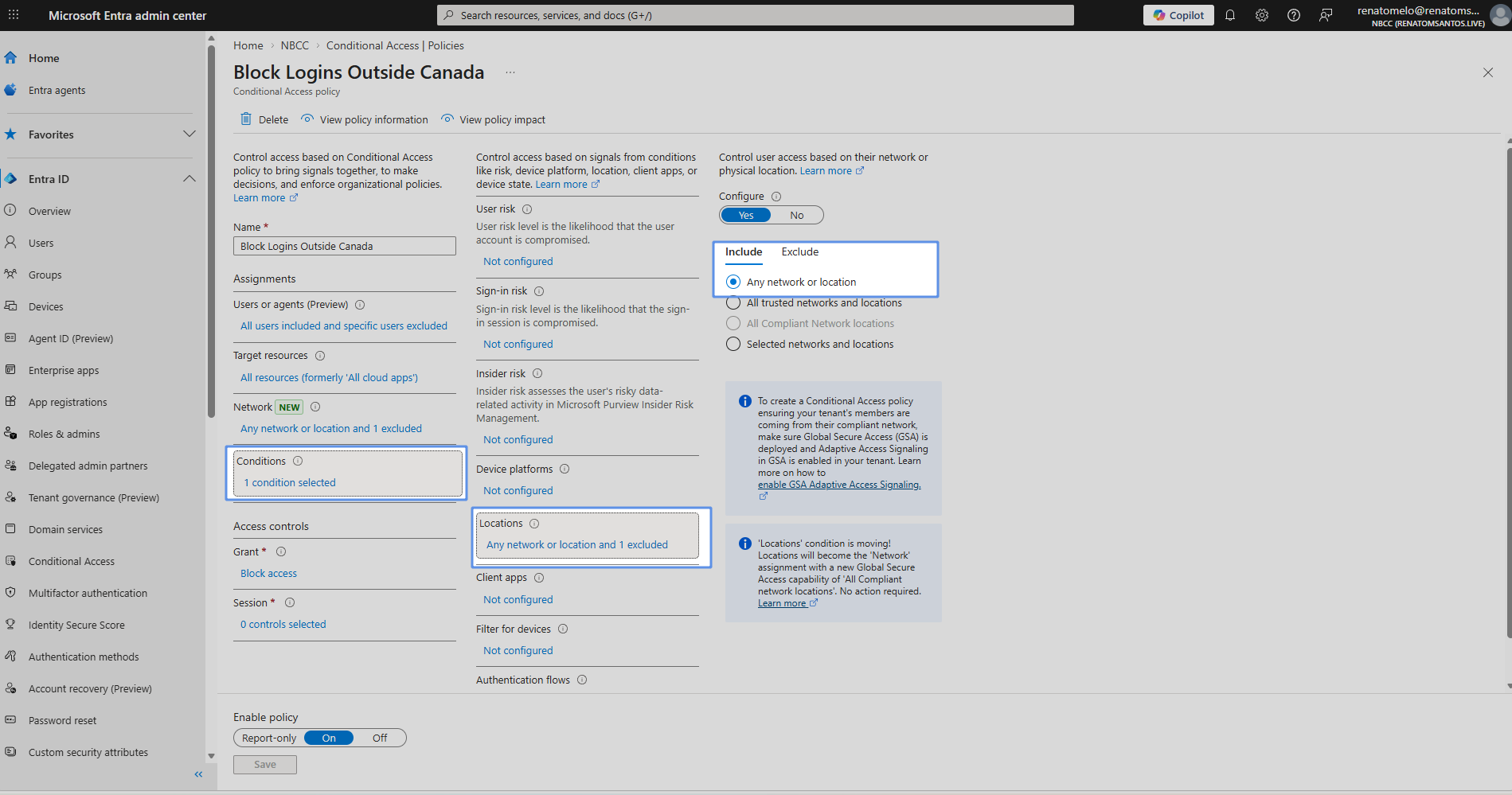
Named locations in Entra ID were used to scope sign-in trust to approved geography.
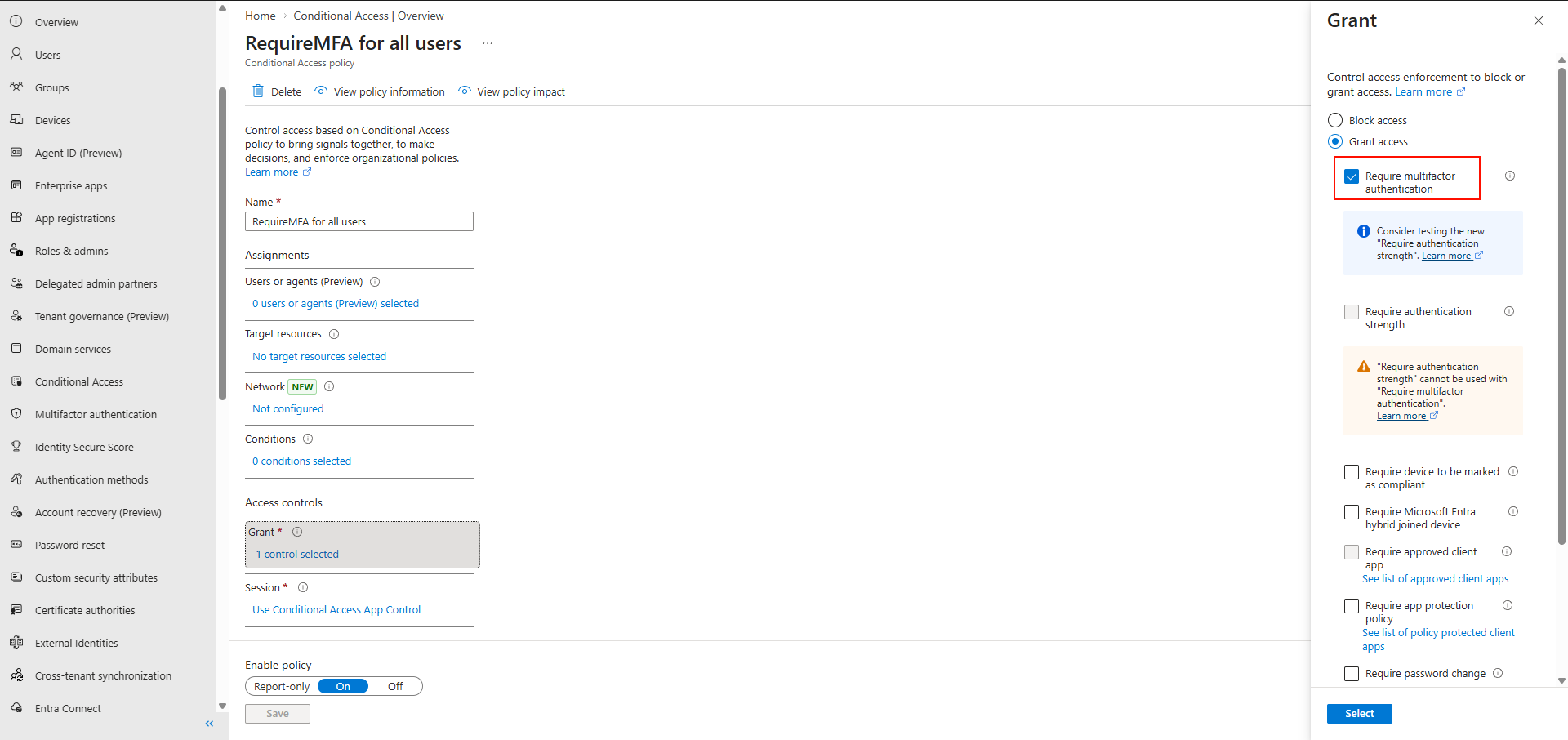
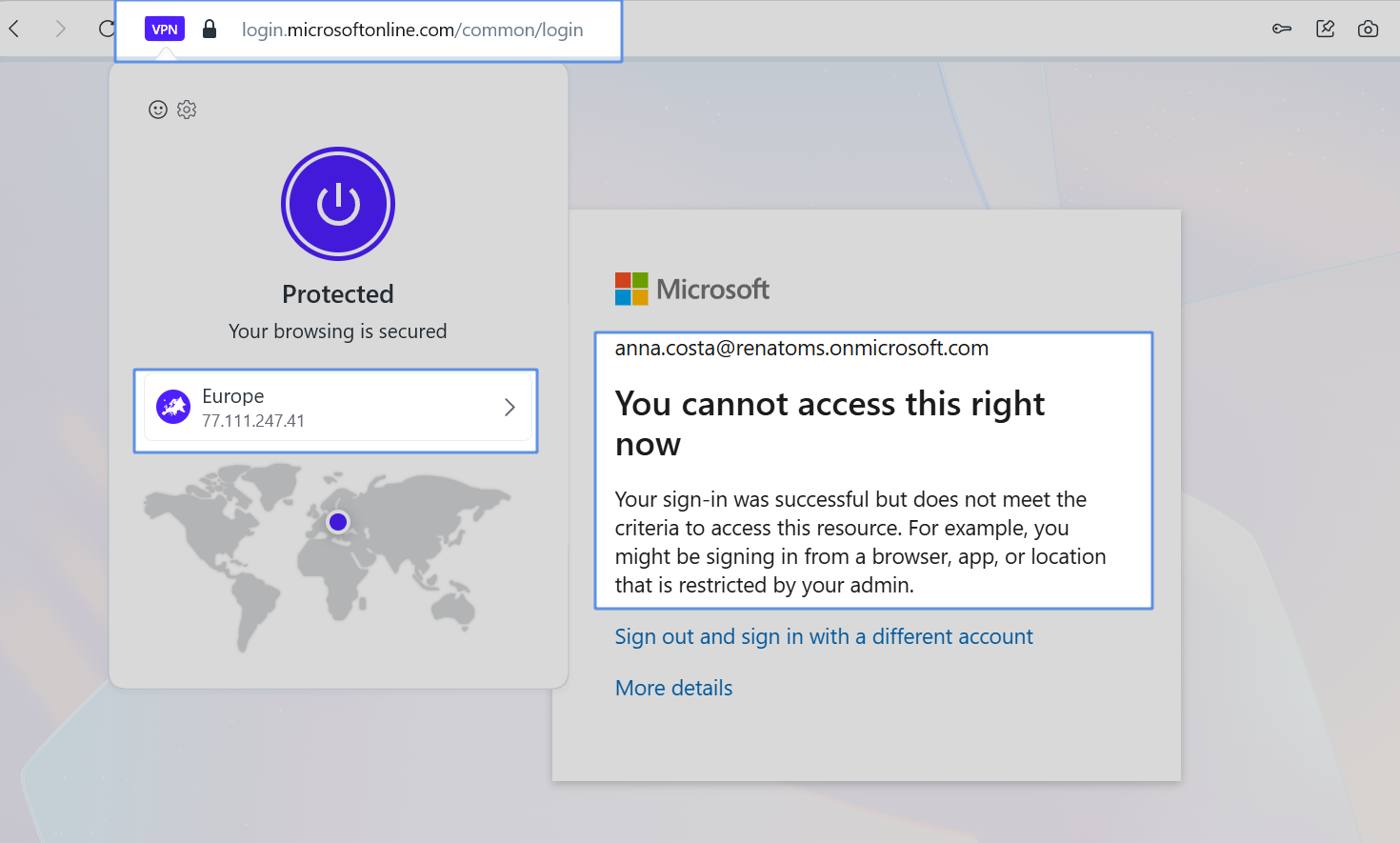
Conditional Access was set to block logins outside Canada, demonstrating real identity-aware control.
The policy was not theoretical; a sign-in from Europe was denied even after authentication succeeded.
| Test Area | What Was Tested | Key Result | Status |
|---|---|---|---|
| T1-T3 | ACL isolation, DHCP assignment, DNS resolution | Segmentation held, clients received correct addressing, internal and external names resolved. | Pass |
| T4-T6 | Portal/Zammad access, WARP remote access, SSO and conditional access | Services were reachable securely and identity policies enforced MFA plus geo restrictions. | Pass |
| T7 | HSRP failover during active uplink interruption | Gateway reachability was maintained while NS-SW-02 assumed the active role. | Pass |
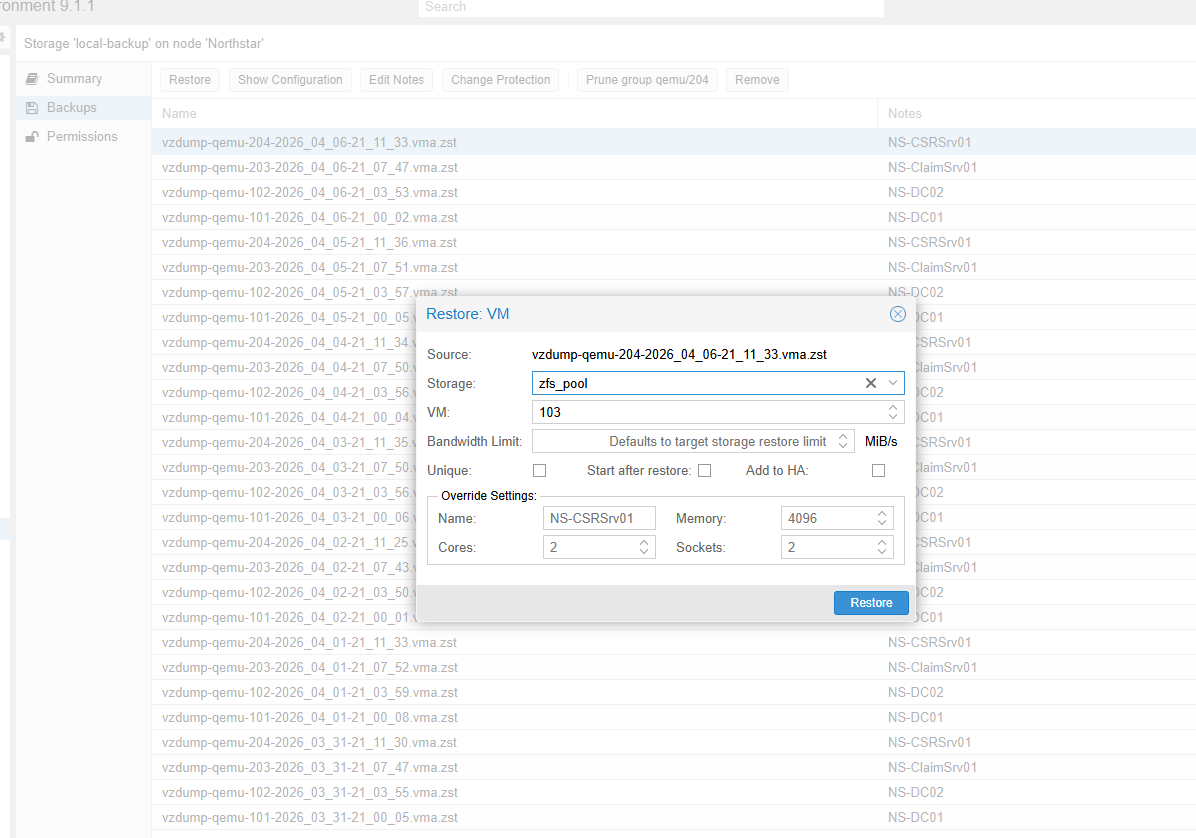
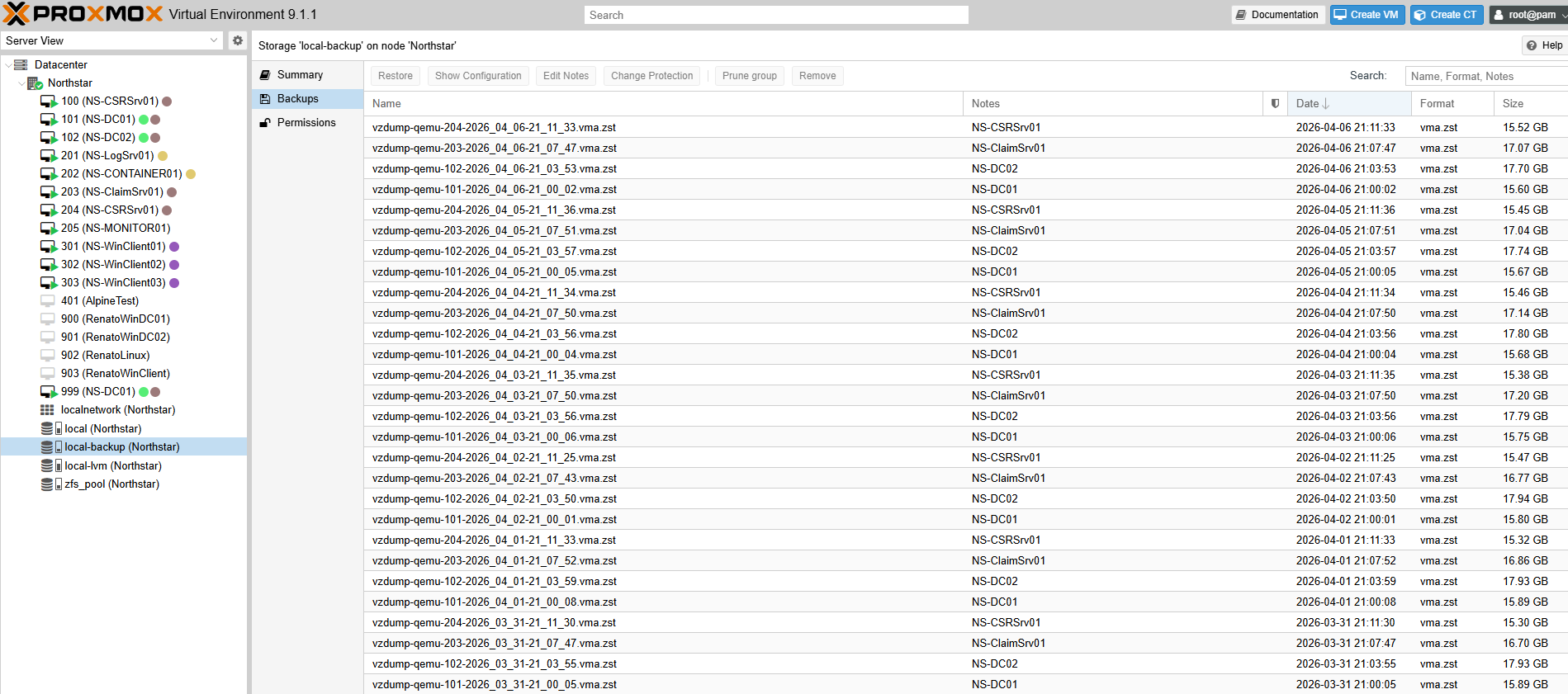
| T8 | Backup restore from offsite immutable storage | Deleted data was recovered successfully from the latest snapshot. | Pass |
The validation plan did more than confirm connectivity. It checked whether the design still behaved correctly under security controls, failover conditions, and recovery scenarios.
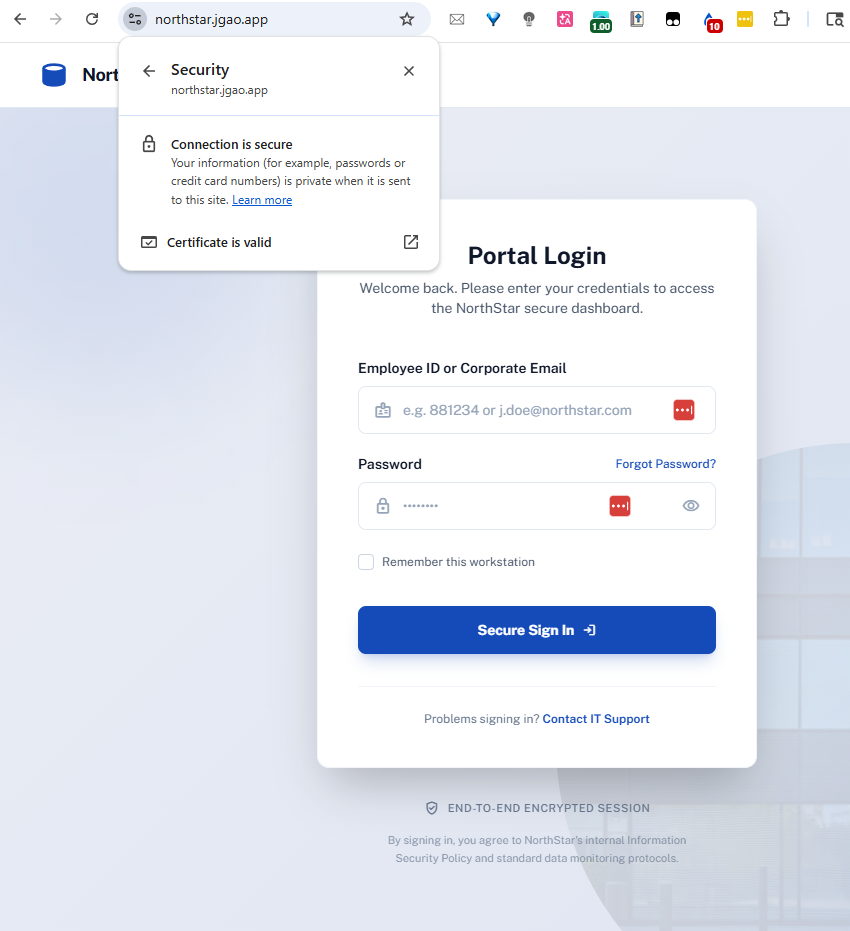
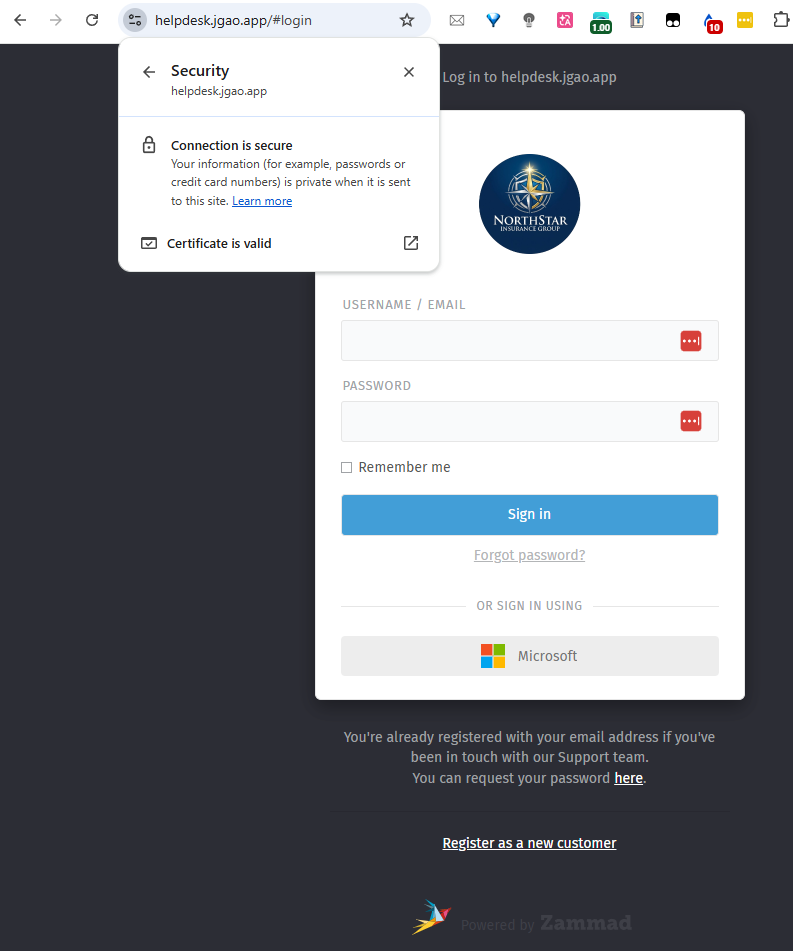
The employee portal presented a valid certificate, proving secure publication through the reverse-proxy path.
Zammad was reachable through the intended secure path instead of relying on direct internal exposure.
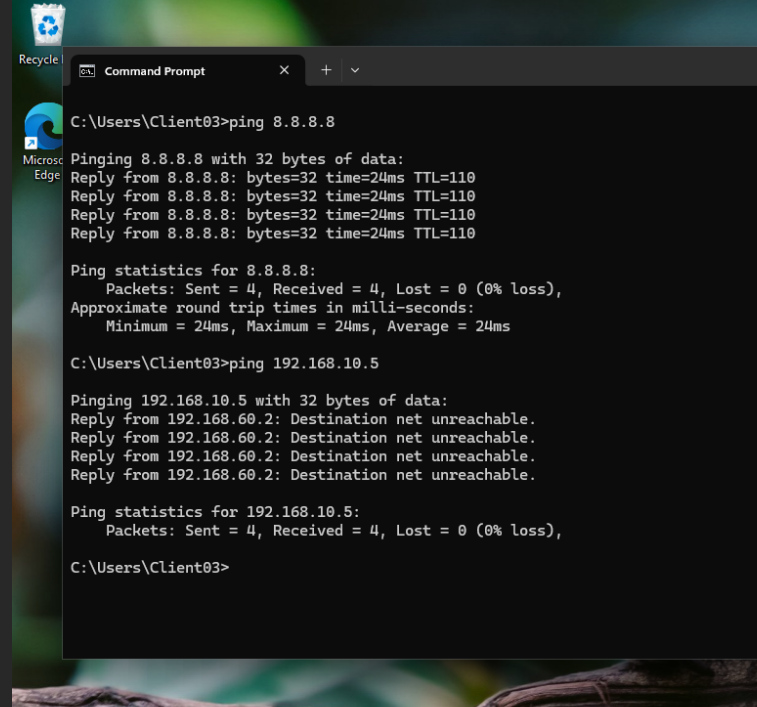
Guest traffic could reach the internet but not the protected internal host, matching the ACL design intent.
Failover demo: the team documented an HSRP switchover by shutting down the active core uplink while monitoring gateway continuity. The standby switch assumed the active role with minimal disruption, which is exactly the behavior the design was meant to deliver.
The project includes role-specific documents that explain configuration intent, addressing standards, known limitations, and day-to-day administration.
The design retains local VM backups and synchronizes them nightly to an immutable S3-compatible repository, giving administrators a recovery path for both operational mistakes and site-level loss.
Backup Procedures folderOpen
Administrators are not left guessing. The handoff documents describe how to verify container health, DHCP failover, HSRP state, firewall posture, and backup synchronization.
The hardest part was aligning secure external publishing with hybrid authentication. Reverse proxy behavior, protocol expectations, and identity controls all had to work together without weakening the security model.
Strong segmentation, identity-aware access, and structured validation created a design that is easier to defend and easier to explain. That combination makes the environment more credible as an operational handoff.
Reduce single points of failure around the Docker host and WAN edge, automate more disaster recovery steps, and improve role mapping so application access tracks group membership with less manual effort.
Final takeaway: the project is strongest not because it is complex, but because its architecture, security controls, validation evidence, and operational documentation all point in the same direction.